
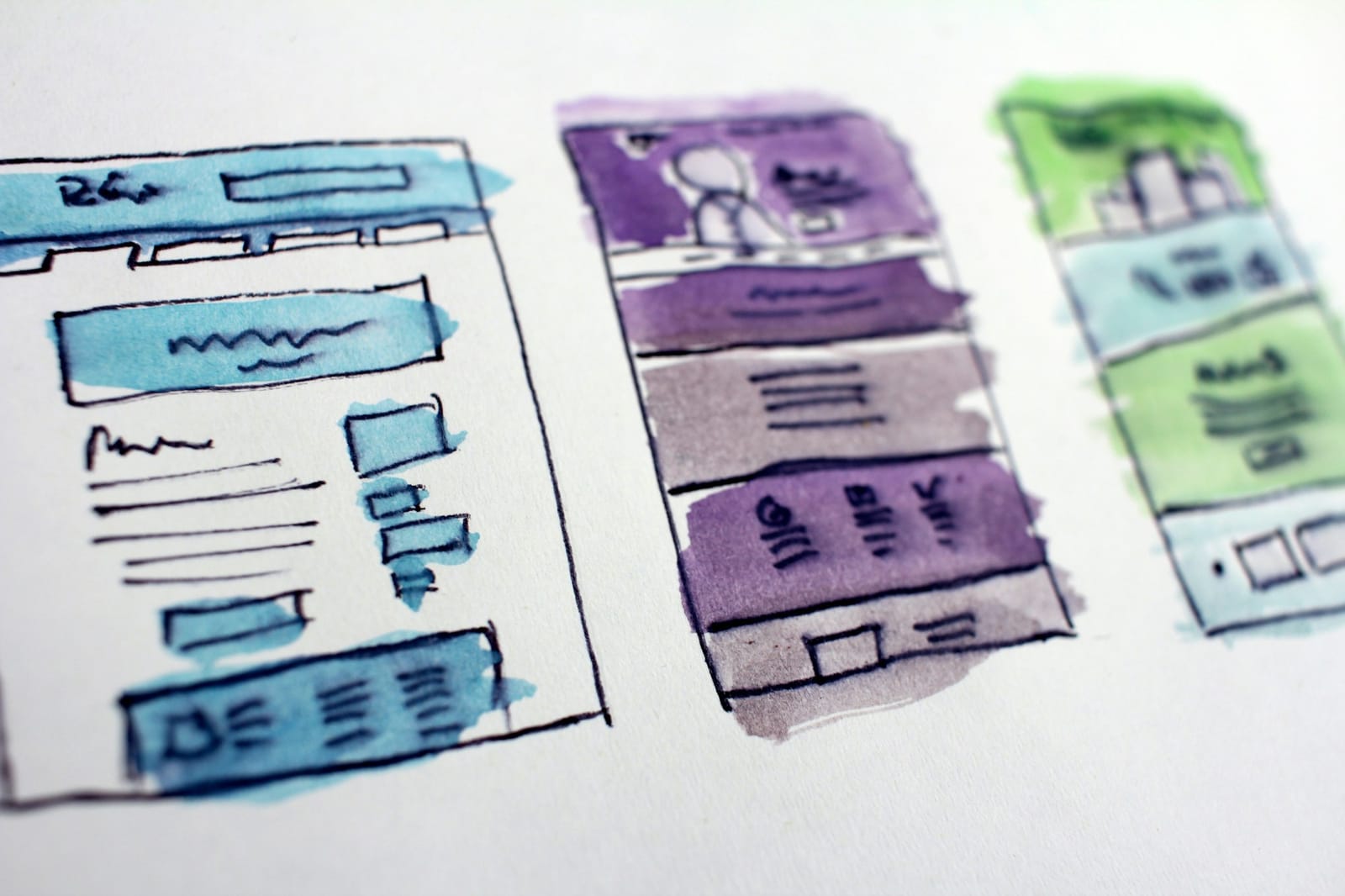
A survey of businesses that redesigned their websites found that nearly 60% saw a significant drop in organic traffic within the first three months — not because redesigning is inherently risky, but because most of those redesigns treated SEO as an afterthought rather than a planning requirement. A website redesign and an SEO reset are two entirely different projects that happen to look identical from the outside. Confusing them is what causes the traffic loss.
Signs it's actually time to redesign
- The design genuinely looks and feels dated next to current competitors — not just a personal preference, but a pattern visitors are likely noticing too.
- The site can't support what the business now needs — a booking system, a larger catalogue, multi-location pages — and bolting features onto the old structure has become impractical.
- Core Web Vitals and mobile performance are structurally poor, and incremental fixes have stopped moving the numbers.
- The information architecture has grown messy over years of ad hoc additions, and visitors and search engines alike are struggling to find what matters.
The risk nobody warns you about
Every page on your current site that ranks in Google has accumulated authority — backlinks, click history, trust signals — tied specifically to its URL. Change that URL, or restructure the site without properly redirecting old pages to their new equivalents, and Google has to rediscover and re-evaluate the new page from scratch. Rankings that took two years to earn can evaporate in the time it takes to relaunch, entirely preventably.
A redesign should transfer your search authority to a better website. Too often, it accidentally resets it to zero instead.
The pre-launch checklist
- Inventory every existing URL on the current site, including old blog posts and pages that don't seem important — anything indexed by Google needs a plan.
- Identify your top-performing pages by organic traffic and rankings before touching anything, so you know exactly what's most at risk.
- Map every old URL to its new equivalent — a clean one-to-one mapping wherever possible, redirecting deleted pages to the most relevant parent category rather than leaving them to 404.
- Preserve or improve — never shorten or remove — the content, headings and metadata on pages that are already ranking well, unless there's a specific, considered reason to change them.
- Keep the XML sitemap, robots.txt and structured data (schema markup) planned into the new build from day one, not added afterward.
Launch day: what actually needs to happen
- Every old URL gets a proper 301 (permanent) redirect to its new equivalent — never a 302 (temporary) redirect, which tells Google not to transfer ranking authority.
- Submit the new XML sitemap to Google Search Console immediately after launch, and check for crawl errors within the first 24 hours.
- Test every redirect manually on a sample of your highest-traffic pages before considering the launch complete — automated redirect rules occasionally miss edge cases.
- Keep analytics tracking continuous across the switch, so before-and-after performance can actually be compared rather than showing a data gap at exactly the moment you need visibility most.
The 90 days after launch
Rankings typically dip briefly even in a well-executed redesign, as Google re-crawls and re-evaluates the new site — this is normal and usually recovers within weeks if the redirects and content were handled properly. Monitor Search Console weekly for crawl errors, watch your previously top-ranking pages specifically, and be ready to fix a missed redirect or an accidentally altered heading quickly rather than discovering it three months later in a quarterly report.
The mistake that causes most of the damage
Nearly every serious ranking loss traces back to the same root cause: the redesign team and the SEO consideration were never in the same conversation. A design agency optimising purely for visual appeal, without anyone checking what's currently ranking and why, will happily restructure navigation, rename URLs and rewrite headings that were quietly doing serious search work — with nobody noticing until traffic drops weeks later.
Website redesign is part of Suvysoft Solutions' website development service, and every redesign we run includes a full URL inventory and redirect map before a single design decision is made — because a beautiful new website that loses its Core Web Vitals scores and search visibility hasn't actually solved the business's problem. If your current site is overdue for a redesign but you're nervous about the rankings it's built up, that's precisely the risk we plan around from day one, and it's worth discussing in a free consultation, alongside a broader SEO & GEO health check if you'd like one.


